
Economist urges: stop throwing good money after bad
How much does cruelty cost? Saul Eslake does the maths.
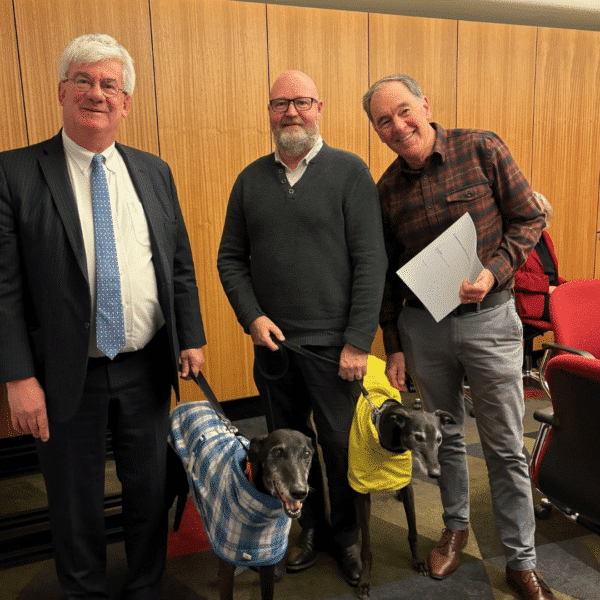
At a media call in Hobart this morning, Dogs’ Homes of Tasmania proudly stood alongside a coalition of animal welfare organisations to highlight the findings of a new economic report from respected independent economist Saul Eslake. His detailed economic analysis of Greyhound racing in Tasmania has revealed the growing taxpayer burden of funding an industry in sharp decline.
We know the inherent cruelty of Greyhound racing. We see it in the dogs that come into our care — broken in body and spirit, discarded once they’re no longer useful to the industry. But now, Mr Eslake’s analysis shows Tasmanian taxpayers have another reason to demand change: this industry isn’t just cruel — it’s a financial dead end. Tasmanians another compelling reason to call time on this outdated and unpopular activity: the economics simply don’t add up.
The findings are clear and concerning:
- Tasmania gives more government funding per capita to Greyhound racing than any other state or territory
- Over the past 15 years, the Tasmanian government has allocated $74.6 million to Greyhound racing through Tasracing, with annual funding increasing by 127%, from $3.5 million in 2010–11 to a projected $7.5 million in 2024–25.
- Only 1% of Tasmanians attended a Greyhound race in the past year (sample data)
- Each $1,000 of government funding now produces just 1.6 race starters (shows us how much money it takes to get dogs onto the track.)
- A 26% decrease in wagering over the past three years
- The cost per job supported by this funding has surged by 91%, making it one of the least efficient uses of public money
- Employment in the sector has diminished, with jobs per $1 million of funding dropping from 150 in 2011–12 to 82 in 2021–22.
While the industry promotes itself as vital to the economy, the data paints a different picture. Mr Eslake’s report shows that Greyhound racing makes up just 0.2% of Tasmania’s employment and economic activity — while receiving funding far out of proportion to its size and public value.
The numbers are heading in only one direction — down. Race meetings, starters, spectators, and wagering are all falling. The only thing going up is the amount of public money being funnelled into this fading industry.
As proud members of this coalition, we again stand proudly in our fight to end Greyhound racing. It’s time. The cruelty is undeniable. The economics are indefensible. The public support is gone.
Read the full report by Saul Eslake here: www.sauleslake.info/the-funding-of-greyhound-racing-in-tasmania
We will keep speaking up — for the Greyhounds we’ve rescued, and the many more still waiting for their chance at a real life. A life on the couch. Not the track.